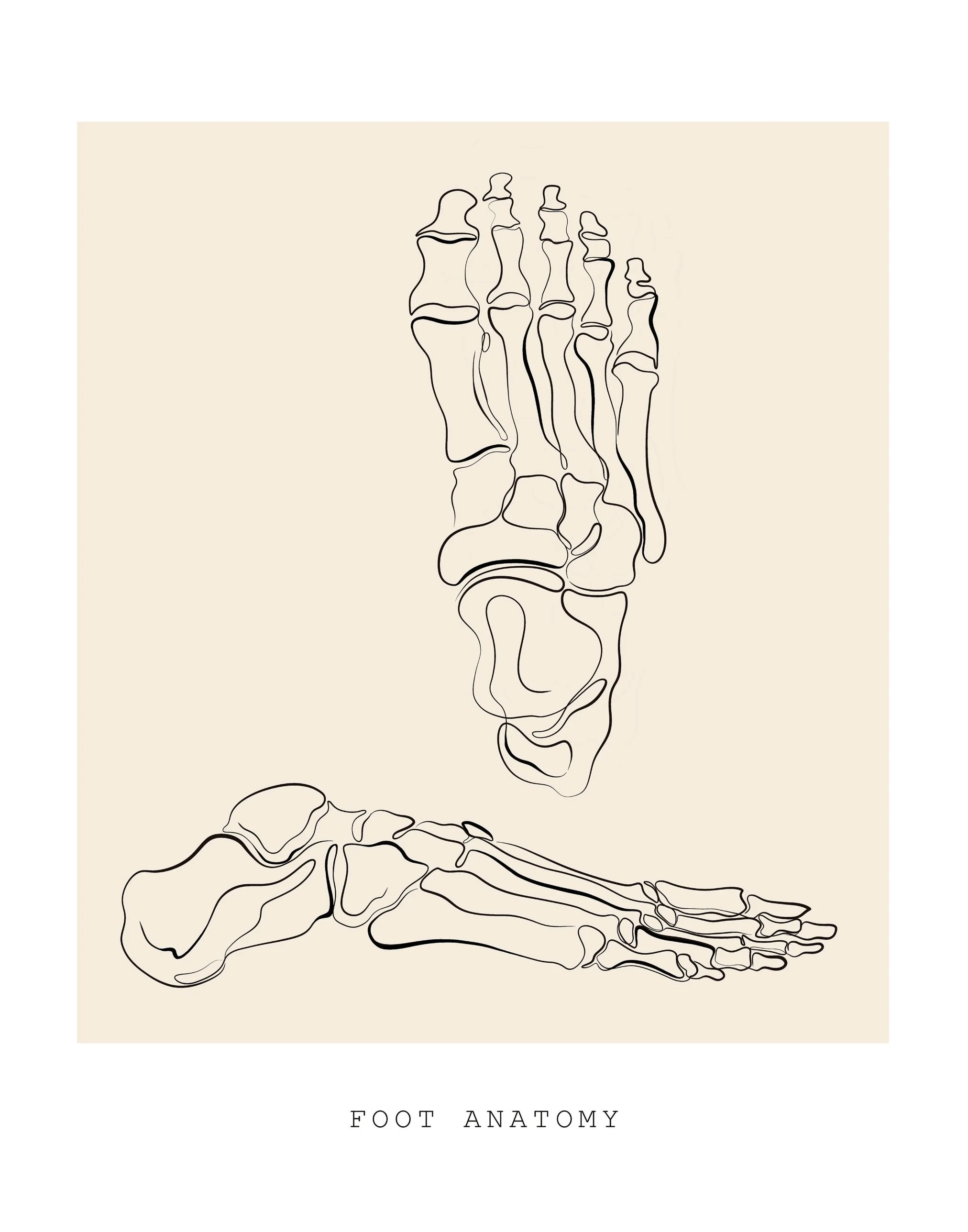
Foot and ankle pain that didn't get better with the usual care
If your heel still hurts in the morning, your ankle still rolls a year after the sprain, or your Achilles flares the first week back to running, the foot is usually not the whole problem. At PhysioVictory in Conroe, we treat foot and ankle pain by finding what upstream is overloading it, most often the hip, and by calming the nerves that keep the area guarded. Visits are one-on-one, 60 minutes for the evaluation and 45 minutes after that.
Who this is for
- Plantar fasciitis or heel pain that has outlasted the frozen water bottle, the orthotics, and the calf stretches.
- An ankle that keeps rolling long after the original sprain healed.
- Achilles pain or stiffness that eases with rest and comes back with load.
- Runners who finished physical therapy, were cleared, and still can't run without pain.
- Pain on the outside of the foot that showed up after rigid arch supports or a switch to zero-drop shoes.
What previous care usually missed
Most people who come to us for a foot problem were treated as if the foot were a separate part. That is rarely because their last therapist didn't know better. It is usually because insurance-driven care has to stay local and short. So the foot got rolled, iced, stretched, braced, and strengthened, and nobody asked why it developed an overuse problem in the first place.
Three things we find over and over:
The problem is upstream. When the glutes and the deep hip rotators can't control the leg during the standing phase of a step, the Achilles and plantar fascia become the body's braking system. Often it is the opposite hip that isn't carrying its share, and the foot pays for it. Treating the foot alone never fixes that.
The foot was overcorrected. A rigid arch support, a zero-drop shoe, or a heavy dose of foot-strengthening can take away the natural motion of the midfoot or overload the outside of the foot. Supports have a place while things settle, but they are not where care should stop.
It is the nerve, not the fascia. Chronic heel pain and Achilles stiffness are often driven by irritated nerve branches running through the foot, sometimes tethered as far up as the low back or pelvis. Deep pressure, icing, and aggressive stretching irritate nerve tissue further, which keeps the local muscles locked in a guarded state. The harder you work the spot, the longer it stays.
If you were cleared to run and still can't
When a runner finishes standard PT and flares the first week back, the original tissue has almost always healed. The gap is between slow clinic strength and what running actually demands. Running is a series of single-leg hops at about 160 to 180 steps a minute, each landing taking two to three times your body weight. Passing a manual muscle test, a slow single-leg squat, and a calf raise does not prepare a tendon for that. We see marathoners who can't do ten clean single-leg calf raises.
What we do instead:
- Test force at speed before anyone runs a stride: double- and single-leg pogo hops, drop landings, bound-and-stop. Can the foot stay springy without the arch collapsing? Can the hip hold the pelvis level under speed?
- Rebuild the spring. Tendons have to be trained to store and return energy, so we progress from heavy slow strength to low-amplitude plyometrics, drop jumps, and bounding.
- Change the mechanics now instead of waiting months for tissue to remodel: a higher step rate and a foot strike closer to your center of mass cut the braking force that flares the knee, ankle, and Achilles.
- Return with structured walk-run intervals, one minute on, one minute off, ten rounds, with a strict rule: pain stays under 2 out of 10, any symptom returns to baseline within two hours, and no new stiffness the next morning before the next step up.
For longer returns we work alongside local performance and track coaches, so the plan doesn't end at discharge.
What the first visit looks like
Visit one is an upstream audit. Before we look hard at the foot, we screen hip and pelvic control, core stability, and how the nerves of the leg move. We test mobility, control, and pain lying down versus standing, check whether the foot can hold a three-point tripod on one leg or dumps weight to the outside edge, and whether the big toe can anchor. Then we change something and retest the same day.
You leave with a plan, not a ten-exercise list. In many cases the first thing we do is remove inputs: stop the daily foam rolling, stop the aggressive stretching, reconsider the shoes, and give the nervous system a break while your training stays the same. Once we see how the foot responds to less, we add what it actually needs, usually hip and core stability or hands-on work for a stiff joint, and then progress to plyometrics and impact training. By visit three you are doing less, with more purpose, and we are measuring the response.
How long it usually takes
Care is spaced to match how tissue heals, not a three-times-a-week template.
- Plantar fasciitis: 6 to 10 visits over 4 to 8 weeks. Early visits focus on hip recruitment and calming the nerves; once the tissue settles, visits spread out and the work shifts to heavy, slow loading you carry on at home.
- Chronic ankle instability: 6 to 10 visits over 4 to 8 weeks. Joint range, big-toe anchoring, balance, then fast multi-directional deceleration work.
- Achilles tendinopathy: 8 to 12 visits over 4 to 8 weeks, spaced one to two weeks apart because tendon remodels slowly. Heavy isometrics, then heavy slow loading, then energy-storage work.
Runners usually progress fastest at twice a week because we are testing the tissue's response at every visit. Once a week works too; it just takes more patience. The more consistently you do the home work, the faster this goes, and it is usually simpler than people expect.
Dry needling is a reset, not a fix. When the calf, posterior tibialis, or deep toe flexors lock the foot into a guarded state, needling those trigger points opens a 24 to 48 hour window where you can load, mobilize, and train the hip without pain shutting the muscles down. We use it inside that window, after the evaluation shows it is appropriate.
When we send you to a physician or podiatrist first
- Signs of a bone stress injury or a high-grade tear: severe night pain, inability to bear weight that isn't improving, a positive heel squeeze test, midfoot bruising, or a suspected Achilles rupture.
- A true bony block to ankle motion that does not change at all with joint work.
- Redness, heat, and one-sided swelling that could be a clot or infection; signs of a systemic inflammatory condition such as gout showing up as heel pain; rapidly progressing numbness.
- No response. If three or four visits of targeted care produce no change in pain, movement, or load tolerance, we stop and send you for imaging or a medical consult. You should feel a noticeable difference within about two weeks. If you don't, something else is going on.
Cost and payment
The evaluation is $225 for 60 minutes. Follow-up visits are $199 for 45 minutes. We are cash-based and give you a superbill for out-of-network claims; HSA and FSA cards work. No packages, discounts, or contracts. In Texas you can see us for 30 days without a referral; past that, or if you plan to submit superbills, we need a referral from your physician on file.
Questions people ask
Should I keep rolling my foot on a frozen bottle? Usually no. Ice and deep pressure irritate nerve tissue, and for a lot of chronic heel pain that is the thing keeping it going. We will tell you at the first visit whether yours is one of those.
Do I need to stop running? Often not. In many cases we keep your training the same on day one and change the inputs around it. If running has to pause, it is short and there is a tested path back.
Are orthotics bad? No. They can help while things calm down. They become a problem when they are the whole plan.
Can you treat a sprain that happened years ago? Yes. The ligament healed long ago; what is usually missing is joint range, big-toe anchoring, and the ability to decelerate at speed. That is trainable.
Do you see runners who aren't injured but want to stay that way? Yes. That is what the Strong Again Program is for: building the strength and spring to handle your mileage before something gives.
Ready to find out what's actually driving it? Call (936) 549-0315 or use the contact form. See all services or read the FAQ.