

Rotator cuff
A rotator cuff tear on an MRI does not decide what happens next by itself. Some people have a tear and little or no pain. Some painful shoulders have an intact cuff. What matters more is whether your shoulder can still do its job. It also matters whether the pain seems to be coming from the tear or from the muscles that have been guarding around it. That is what we assess in the first visit. It helps us decide together whether a surgical opinion makes sense or whether we can start with physical therapy. In Conroe, with a plan you actually understand.
Who this is for
This is for the person with a scan that says "partial-thickness tear" and a surgeon who said to try therapy first, for the person who lifts and cannot press overhead on one side anymore, for the parent who cannot lift a child onto a hip without a catch of pain, and for the person four to six weeks out from a repair who wants rehab done properly rather than in a gym with six other patients.
The mistake people make
With a tear on paper, people stop using the arm. That shrinks the very muscles that could take over for the torn one. After a repair, the mistake runs the other way. People feel good at six weeks, reach for the coffee cup overhead, and decide rehab is done. In my experience the cuff is not fully recovered until it can handle a quick, unexpected load with the shoulder blade staying steady. That usually comes months after reaching for the coffee cup feels fine. The muscle never got the time under tension it needed to do its job again.
What's usually going on
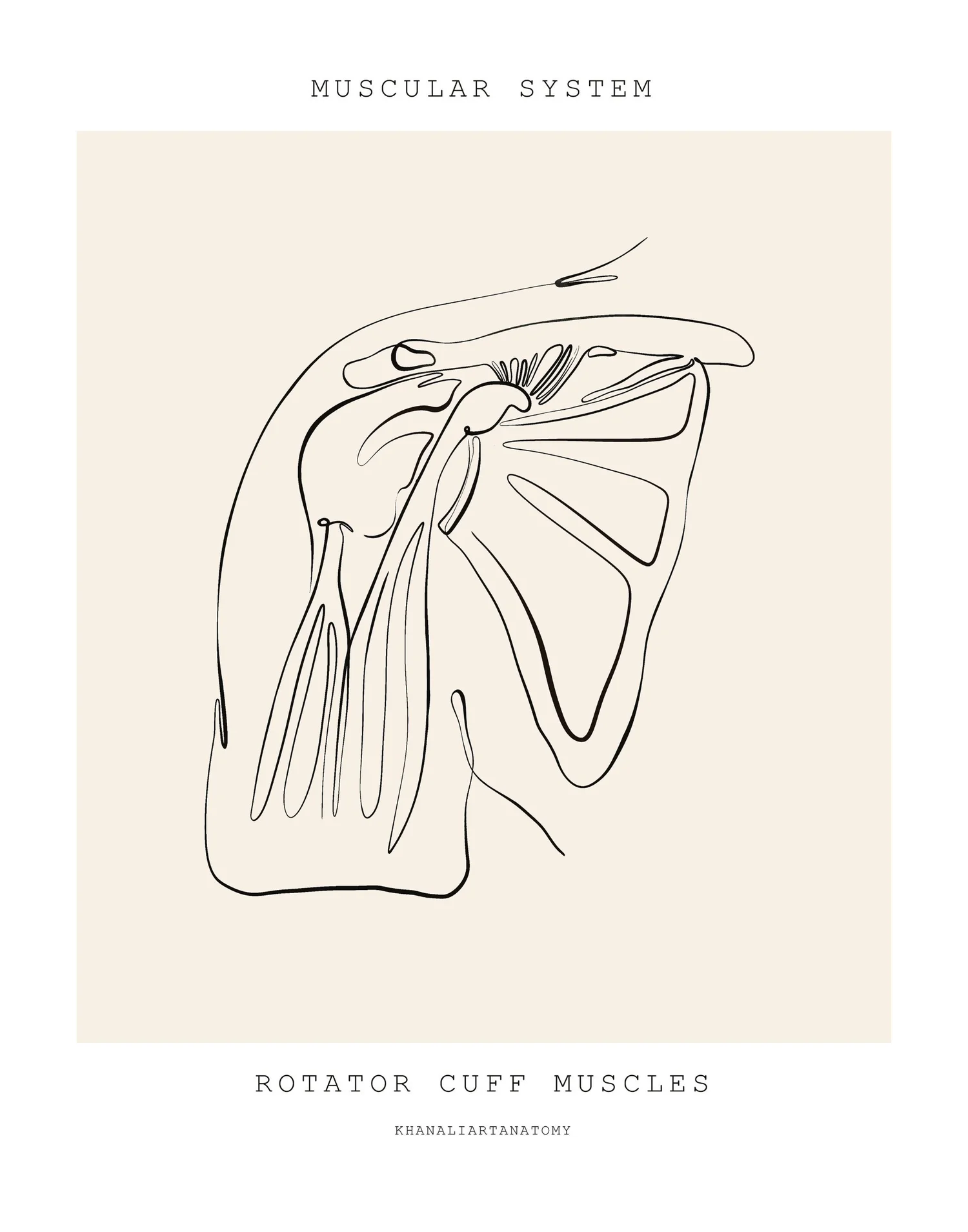
The rotator cuff is four small muscles. Their job is to keep the ball centered in the socket while the big muscles move the arm. When one is torn or sore, the others and the shoulder blade muscles can be trained to cover for it. That is why a shoulder with a tear can be strong and pain-free. Often the muscles that feel tight around a sore cuff are bracing to do a job they were not made to do, because the shoulder blade muscles have gone quiet. If you still have reasonable control of the arm and your pain behaves more like muscle guarding than a structural failure, many people do well without surgery. We work on the remaining cuff muscles and the muscles that steer the shoulder blade so they can share the workload.
What a first visit looks like
A 60-minute hands-on evaluation. Your therapist tests each cuff muscle, watches the shoulder blade as you lift, and checks the neck and ribs that feed the shoulder. Then we sit down together and go through the honest picture, including whether we think surgery is the right call for you. We discuss strategies you can begin doing at home to help things settle. Then we help you plan out how to get back to feeling like yourself again. You will not be rushed, dismissed, or sent home with a generic printout. We don't do guesswork. After a repair, the first visit is gentler. We protect the repair, restore careful passive motion, and get the neck and shoulder blade moving without stressing the surgical site. Every follow-up starts in the recovery room. Your therapist has planned a calm, welcoming recovery experience for your transition into the clinic, where you decompress, settle your nervous system, and relax your muscles. That prepares you to get the most out of the hands-on and movement-based portions of your session.
How long it usually takes
The number of visits varies. It depends on how serious the problem is and how consistently you do your part at home. Without surgery, most people feel significantly better in three to four visits. Strength is usually back in about eight. We typically see you once or twice a week. Your home habits are part of the Victory Method. Five minutes a day, as non-negotiable as brushing your teeth. After a repair, the timeline follows the surgeon's protocol. Most people come to us around week four to six and work with us over three to four months, less often as they progress.
What it costs
The evaluation is $225 and follow-ups are $199. Cash-based and out of network; HSA, FSA and CareCredit accepted; superbill once a physician referral is on file. No referral is needed to start, and after surgery your surgeon's order serves as the referral. Over 600 Conroe neighbors have come through this door. More than 200 of them left five-star Google reviews, more than any other physical therapy clinic in Conroe.
When we'll send you somewhere else
One evaluation is the right place to start. If we see any medical red flags, we will refer you out rather than recommend treatment. A full-thickness tear with real weakness, especially after a fall in someone who needs the arm for work or sport, deserves a surgical opinion early. Repairs do better when they are not delayed. If that is you, we will say so at the first visit.
Questions people ask
I have a tear. Can I avoid surgery? Many people can. It depends on how much control you still have and where the pain seems to be coming from, which is what the exam helps us see.
When should I start therapy after a repair? When your surgeon clears you, usually around four to six weeks. We follow the surgeon's protocol and talk to their office if anything looks off.
Will I ever lift overhead again? That is the goal we work toward. The step people most often skip is training the shoulder for quick loads, not just slow ones.
Do you work with my surgeon? Yes. We send progress notes when asked and flag anything that needs their eyes.
What to do this week
- Keep using the arm below shoulder height for everything that does not hurt.
- Stop testing the painful motion ten times a day to see if it still hurts; it does.
- Fill out the contact form and tell us whether you have had imaging or surgery.
Ready to talk? You don't need to be in crisis to get care. Tell us what's going on and we'll tell you if we're the right fit. Fill out the contact form and our team will reach out, usually the same business day.
Anatomy line art by Khanali Anatomy, used with permission.