

TMJ and Jaw Pain Physical Therapy in Conroe
I see people with jaw pain almost every week, and most of them arrive with the same story. The jaw clicks or locks, the face feels tight by lunchtime, and the headaches start at the temples or the base of the skull. Many of them have already been to a dentist or a TMJ specialist, and a few have tried Botox or a chiropractor. Here is the thing I tell every one of them: the jaw is usually not the one causing the problem. It is the one paying for it. The muscles of the neck, the shoulders and the face pull on the jaw all day long, and that tension is what I treat, one-on-one, for a full hour at a time, at our clinic in Conroe. If a dentist, an orofacial pain or airway dentist, or a myofunctional therapist sent you here, I work alongside them rather than replacing them.
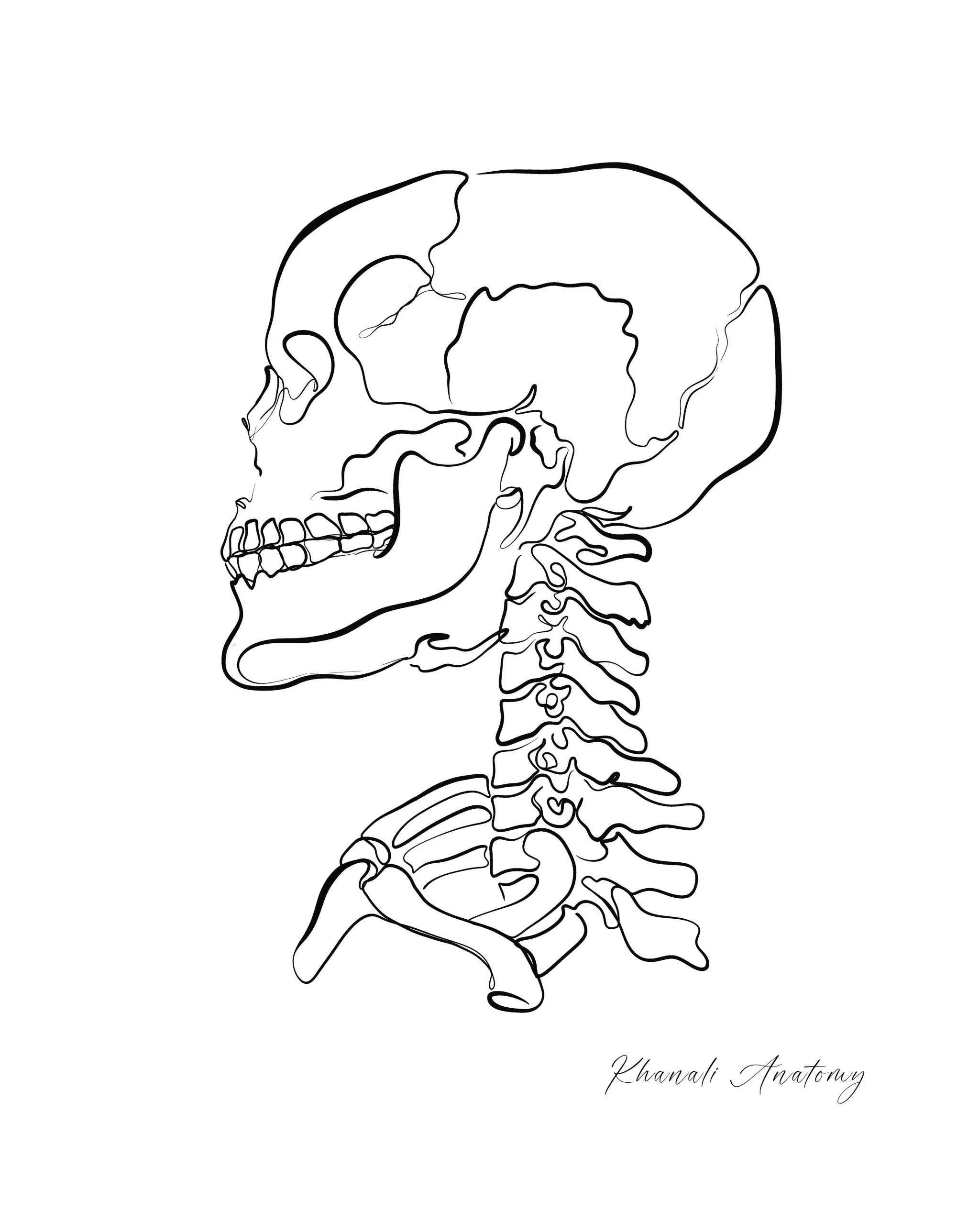
Your jaw does not live on an island
Your jaw sits on top of your neck, and your neck sits on top of your shoulders and upper back. I like to describe the head as a ten-pound ball balanced on a broomstick. When your shoulders roll forward and your head drifts forward even an inch, whether from the desk, the phone or the drive home, the neck muscles have to work overtime just to hold it up.
That forward head position pulls the lower jaw back and down. Every time you swallow, talk or chew, the jaw muscles have to pull harder against that drag. When the jaw starts clicking, popping or locking, it is usually telling you that the neck and upper back dropped the ball. I cannot calm a jaw down for good until I work on the foundation it rests on, which is why a jaw visit with me spends as much time on your neck and shoulders as on your jaw.
Test at home
You can feel what I mean in about thirty seconds. Sit the way you sit at the end of a long day, slouched, with your head forward, and swallow. Notice how hard your jaw has to grip just to get that done. Now bring your ears back over your shoulders and swallow again. Most people feel the jaw let go on the second try. That is the specific connection we work on, and it is why your breathing and your posture get as much attention here as your jaw.
Who this is for
The people I see for this usually have a jaw that clicks, pops or catches when they open or close, or a jaw that locks and will not open all the way. Many of them clench or grind, with or without a night guard. Some come in for headaches at the temples or the base of the skull, or for ear fullness and ringing that the ear doctor could not explain. Others notice that their jaw is worn out after eating, talking or a stressful day, and almost all of them carry neck and shoulder tension that never fully lets go. A good number were simply told by their dentist, TMJ specialist or myofunctional therapist that the muscle side needs work, and they are not sure what that means yet.
If you have a night guard, please keep wearing it. It is protecting your teeth and your joint while we work on everything around them.
What the first visit looks like
Your first visit is a full hour with me, one-on-one. It is a hands-on evaluation from the start, and the whole hour goes to understanding your case and starting the plan. Nobody hands you a sheet of exercises and leaves the room.
We talk first. I want to know how you sleep, whether you snore or use a CPAP, how much stress you are carrying, when the headaches show up and where, whether chewing wears you out, and what your dentist has already done. Then I look at how your upper back, neck and shoulders move and how that changes your jaw opening. I measure how far you can open and whether the jaw sways, catches or clicks on the way. I also check your breathing with a balloon and see whether you can close your throat and control it, because your throat, your breathing muscle and your core are three lids on one container, and when one grips, the others follow. Then I use my hands on the jaw muscles, the temples, the base of the skull and the upper shoulders to find where the tension is being held.
I rarely work inside the mouth. Most people with jaw pain have had plenty of hands in their mouth already, and I get good results releasing jaw tension through the neck, the shoulders and the muscles on the outside of the face. If I ever do need to work inside, it is gentle, it is never painful, and I ask first.
Dry needling to the jaw and temple muscles is part of the plan when you want it, and I explain exactly what it is before I do anything. If needles are not for you, I have other ways to get the same release, so nothing about your plan depends on them.
You leave the first visit with a resting jaw position to practice, one or two short drills for calming a flare, and plain guidance on pacing, which usually means softer food during a flare, no gum, and no forced wide yawns. Relief can start the same day.
Why what you tried did not hold
Most people come to me having already tried a few things, and none of those things were wrong. They just reach different parts of the problem.
A night guard protects your teeth from wear, but you can still clench full force into it, and it does nothing for a forward head position. Botox quiets the clenching muscle for a few months, and if the posture, neck irritation or airway strain underneath is still there, the clenching comes back when it wears off. I think of those months as a good window for rehab to take hold. A chiropractic adjustment can loosen the neck for a while, but if the clenching habit and the muscle tension are not retrained, the neck tightens right back up.
Then there is the advice to just stop clenching. I wish it worked that way. Clenching is not a decision. It is an automatic response to stress, to airway resistance during sleep, or to a neck that is working too hard, and willpower does not switch it off. Changing what the neck and jaw are doing can.
How long it usually takes
If the jaw tension showed up recently, it usually takes four to six visits. If it has been going on for years, we usually start at twice a week for four weeks, and then we sit down together and look at your progress before planning the next stretch. Visits spread out as you learn to release the tension yourself and pace your jaw through the day.
Better usually looks like opening smoothly without the catch or the sharp click. It looks like eating a steak or an apple without paying for it the next morning, and waking up without the temple pressure or the full ears. Most of all, it looks like having one or two reset drills that stop a stress flare before it turns into three days of a locked jaw.
Cost and payment
The first visit is $225 and follow-up visits are $199. We are a cash-based clinic, so you pay at the time of the visit, and we can give you a superbill for out-of-network benefits when a physician referral is on file. HSA and FSA cards work. You do not need a referral to start, because Texas lets you see a physical therapist directly for thirty days. If your dentist or TMJ specialist sent you, bring whatever they gave you. There is more on our cost and insurance page.
Working with your dentist
I do not replace your dentist or your TMJ specialist. Your appliance protects your teeth and positions the joint at night, and that is their work. What your dentist usually wants from me is the strength side. I help you build your core, your diaphragm and your shoulders so your neck and jaw can stop doing all the holding and your alignment improves. I also prepare people for an upcoming tongue-tie release or jaw procedure so they go in with less tension and come out with a recovery plan. Tongue resting position and breathing retraining belong to the airway dentist and the myofunctional therapist, and I work closely with them rather than duplicating what they do. With your permission, I send your provider a short progress note that covers how far you can open, what I found in the muscles, how your neck is responding, and anything you tell me about how the appliance is fitting. I take referrals from general dentists, orofacial pain and airway dentists, and myofunctional therapists across Conroe and The Woodlands.
When we send you somewhere else first
There are a few situations where I want a dentist, an orofacial pain specialist or a physician to see you first or alongside me. If your jaw locked suddenly and will not open past a finger or two, if you have new numbness in your face, if the pain started with a blow to the jaw or head, or if the joint itself has never been looked at and seems to be getting worse, I will tell you that at the first visit and help you get to the right person.
Questions people ask
Do I need to see a dentist before I come? No. You can start with me directly. If I find something that needs a dentist or a specialist, I will say so and help you get there.
Will you work inside my mouth? Rarely. I get good results through the neck, the shoulders and the outside of the face. If I ever do, it is gentle and never painful, and I ask first.
Should I stop wearing my night guard? No. Keep wearing whatever your dentist prescribed. I work on the part it cannot reach.
Can you help if I already had Botox? Yes. The months after an injection are a good time to retrain the neck and jaw, so the relief lasts past the Botox.
How many visits will it take? If this is recent, it usually takes four to six. If it has been years, we usually start at twice a week for four weeks and then look at your progress together.
Do you do dry needling for the jaw? Yes, when you want it. I explain exactly what it is first, and if needles are not for you, there are other ways to get the same release.
Tell us what is going on · What to expect at your first visit · All services
Anatomy line art by Khanali Anatomy, used with permission.