

Pelvic floor therapy during pregnancy
Pregnancy changes how you carry weight, breathe and stand. Most of that is your body doing exactly what it should. It becomes a problem when it gets stuck: a pelvis that aches with every step, a pubic bone that catches when you roll over in bed, a tailbone that cannot sit through dinner. Functional pelvic floor care during pregnancy is about helping the pelvis and the breath keep up with the changes, with the birth and the recovery in mind. There are no internal exams here. Everything we do is movement-based, with your clothes on. In Conroe, with a plan you actually understand.
Who this is for
Most of the pregnant women who come to us are in the second or third trimester with pelvic girdle pain, tailbone pressure or pubic symphysis aching. Some come earlier because they had trouble after a previous birth and want to get ahead of it. Some are sent by a midwife or birth center. If you are nervous about what a visit involves, that is the first thing we will talk about.
The common mistake
Treating pregnancy pain as something to wait out. The waddle, the belly pulling you forward, the shallow breathing and the rounded shoulders are adaptations. None of them is wrong. The mistake is living in them for five months without anything to balance them. With the Victory Method, we teach your body to adapt to working out with an extra 10 to 15 pounds, so you stay ahead of the pregnancy weight gain and your pelvis stays tolerant of the weight that is coming. The other mistake is doing a lot of kegels on the assumption that a tighter floor is a safer floor. For birth, the pelvic floor also needs to know how to lengthen and let go.
The reframe
The belly pulls you forward and the pelvis widens for stability. The back of the hips compresses. The breath gets shallow and moves up into the neck. The chest and shoulders start preparing to hold a baby. The pelvic floor works together with the diaphragm. When the breath stops short, the floor tends to stop moving with it. The muscles that feel tight in pregnancy are usually bracing to do a job they were not made to do, often holding a pelvis that the glutes have stopped supporting. Three things help most of this: 360-degree breathing so the floor learns to lengthen and release, glute-driven support so the pelvis stops relying on the ligaments alone, and positions that keep the pelvic outlet open for birth.
What a first visit looks like
Your first visit is a 60-minute hands-on evaluation, not a treatment session. We want to understand what is driving the pain before we treat it. Your therapist looks at how you breathe, how your pelvis and hips move, and where the pressure goes when you lift and when you cough. We ask what hurts and when. Then we sit down together and explain what we found. We discuss strategies you can begin doing at home that day. Then we help you plan out how to get back to feeling like yourself again, with the birth in mind. You will not be rushed, dismissed, or sent home with a generic printout. We don't do guesswork. Every follow-up starts in the recovery room. Your therapist has planned a calm, welcoming recovery experience for your transition into the clinic, where you decompress, settle your nervous system, and relax your muscles. That prepares you to get the most out of the hands-on and movement-based portions of your session. We avoid long periods flat on your back late in pregnancy, heavy abdominal strain and high-impact loading. Gentle joint work, glute and hamstring strength, breathing and positioning are all safe and are most of what we do.
How long it usually takes
The number of visits varies with how far along you are and how consistently you do your part at home. Most people feel significantly better in three to four visits. Many pregnant clients have four to eight visits spread over the remaining weeks, once a week or once every two weeks. The most important thing is keeping your body a little stronger than your life requires of you. When the muscles are not quite strong enough for the load, they brace. Bracing builds tension and lactic acid quickly, and that is often what is behind the soreness so common in pregnancy. Your home habits are part of the Victory Method. Five minutes a day, as non-negotiable as brushing your teeth. They matter a lot here. The body is changing every week, and the habits are what carry into the birth.
What it costs
The evaluation is $225 and follow-ups are $199. Cash-based and out of network; HSA, FSA and CareCredit accepted; superbill once a physician or midwife referral is on file. No referral is needed to start. Over 600 Conroe neighbors have come through this door. More than 200 of them left five-star Google reviews, more than any other physical therapy clinic in Conroe.
When we'll send you somewhere else
One evaluation is the right place to start. If we see any medical red flags, we will refer you to your provider rather than recommend treatment. Bleeding, leaking fluid, regular contractions before term, a severe headache with vision changes, or a sudden change in the baby's movement go to your provider first.
Questions people ask
Is pelvic floor therapy safe while pregnant? Yes, the way we do it. No internal exams, nothing high-impact, and positions adjusted to how far along you are. Mamas tell us they love feeling empowered by their care now, rather than feeling like a sitting duck waiting to put their pelvic floor back together after delivery.
Will this help the birth itself? The goal is a pelvic floor that knows how to let go and a pelvis that can move well. We cannot promise how a birth will go, and we would not want to; what we can do is help you go in prepared.
Should I keep exercising? Yes, with changes. We will tell you what to keep and what to swap.
Should I come back after the baby? Any time after birth, as long as getting here does not add stress to your postpartum recovery. We start where you are. The postpartum page explains more.
What to do this week
- Notice where your breath goes. If it stops short at the belly or rides up into your neck, that is one of the first things we look at.
- Many mamas sleep more comfortably with a pillow between the knees and one under the belly. It is not a prescription, just something a lot of them find helpful. The pillow we recommend is on our products page.
- Fill out the contact form and tell us how far along you are and what hurts.
Ready to talk? You don't need to be in crisis to get care. Tell us what's going on and we'll tell you if we're the right fit. Fill out the contact form and our team will reach out, usually the same business day.
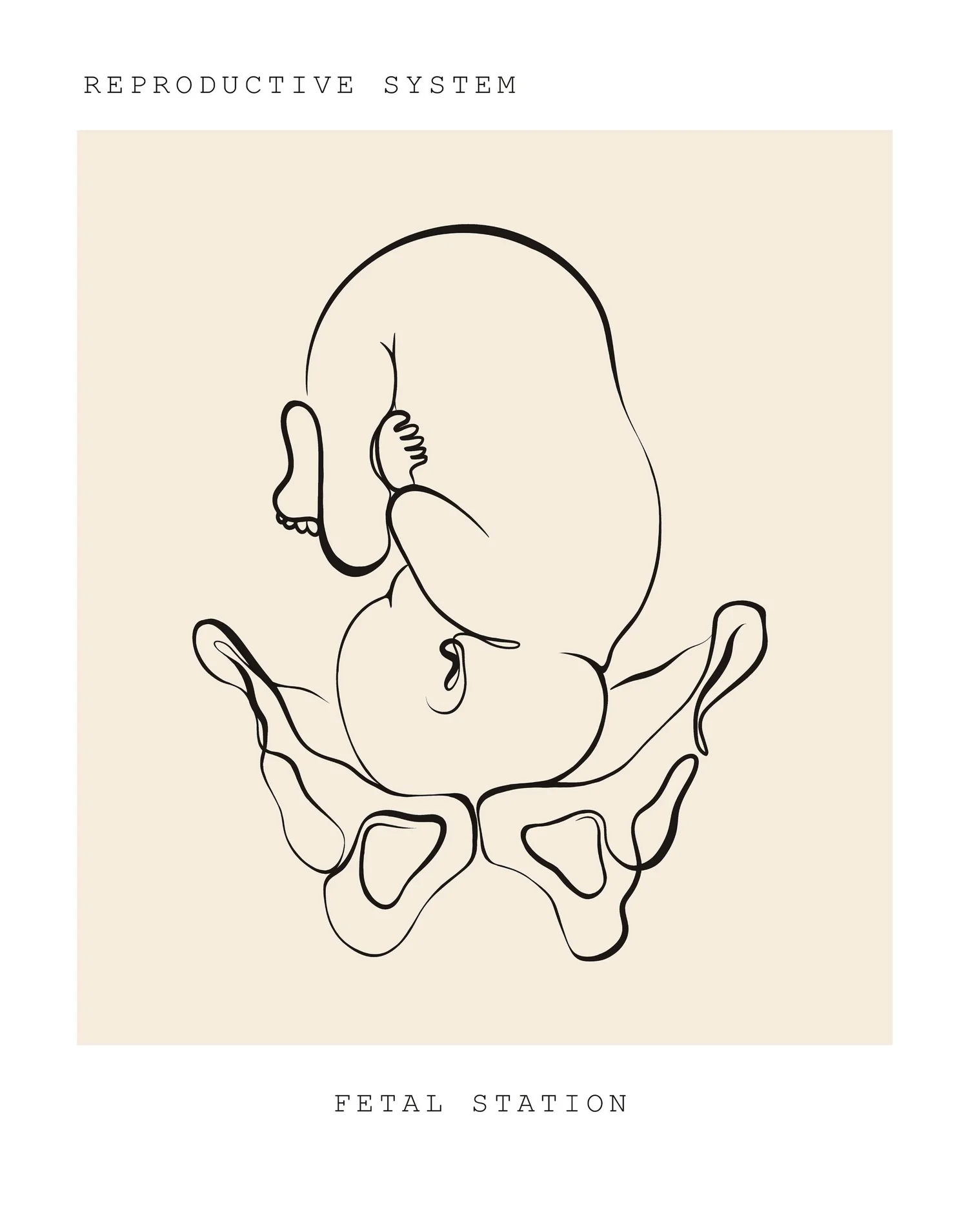
Anatomy line art by Khanali Anatomy, used with permission.