

Why is my neck still tight even though I stretch it every day?
You stretch it in the morning. You get a massage once a month. You bought the pillow. And by lunchtime it is tight again, sometimes with a headache creeping up from the base of the skull. It is not that the neck is too tight and needs more stretching. It is more likely that the neck is working too hard for muscles that have stopped showing up, and no amount of stretching changes that. I know neck pain from the inside. Years ago, as a nursing mom with a neck that would not quit, I did everything right and found a system that was not built for real life. That experience is part of why this clinic exists, and why we do not start with a list of neck stretches. In Conroe, with a plan you actually understand.
Who this is for
The person whose neck is tight by lunchtime, every day, regardless of the pillow. The one with headaches that start at the base of the skull and creep over the top. The one whose jaw clenches when the neck tightens, or the other way around. The one who has had a massage every month for two years and feels good for a day. The one with an arm that tingles when they look down at a phone. And the person whose neck has not been the same since a car accident.
The common mistake
Stretching the tight side and pulling the shoulders down and back to fix posture. It feels logical. The muscle is tight, so you lengthen it. But a tight neck muscle is usually tight for a reason, and in my experience, stretching a muscle that is compensating for a neighbor tends to bring the tension back within a few hours of the stretch or the massage. Pulling the shoulders down adds one more holding habit on top. The other thing people miss is breathing. A neck that lifts the ribs with every inhale is working many hundreds of times an hour, and we check for that.
The reframe
It is not that your neck is weak or damaged. It is more likely that it is bracing, because it is doing a job it was not made to do. The upper back and rib cage are supposed to support the neck. When they are stiff or rounded, the small muscles at the base of the skull and the larger ones across the top of the shoulders end up holding the head up all day. They ache the way any muscle does when it does not get to rest. The jaw shares muscles with the front of the neck. That is part of why a tight neck and a clenched jaw often arrive together. The first rib and the way the ribs move when you breathe also affect how much work the neck has to do. That is why I trained my team to assess all of this rather than only the neck.
What a first visit looks like
Your first visit is a 60-minute hands-on evaluation, not a treatment session. We want to understand what is driving the tightness before we treat it. Your therapist checks how the neck moves and how much of what is lost is muscle guarding, tests the nerves that run down the arm, feels the first rib and how the upper back moves when you breathe, and looks at the jaw if it is part of the story. We test the muscles between the shoulder blades that are supposed to hold the shelf up. Then we sit down together and explain what we found. We discuss strategies you can begin doing at home to help things settle. Then we help you plan out how to get back to feeling like yourself again. You will not be rushed, dismissed, or sent home with a generic printout. We don't do guesswork. Every follow-up starts in the recovery room. Your therapist has planned a calm, welcoming recovery experience for your transition into the clinic, where you decompress, settle your nervous system, and relax your muscles. That prepares you to get the most out of the hands-on and movement-based portions of your session. Upper trap dry needling tends to give a quick result, so we often do it at the first or second follow-up.
How long it usually takes
The number of visits varies. It depends on how serious the problem is and how consistently you do your part at home. Most people feel significantly better in three to four visits. Strength is usually back in about eight. We typically see you once or twice a week. Your home habits are part of the Victory Method. Five minutes a day, as non-negotiable as brushing your teeth. That is the magic of the Victory Method. Headaches and end-of-day tightness often change within the first few visits. A neck that has been tight for years often needs closer to ten visits for the new habits to hold. Often the reason it became chronic is that previous care never strengthened the upper back muscles that should be holding the head up.
What it costs
The evaluation is $225 and follow-ups are $199. Cash-based and out of network; HSA, FSA and CareCredit accepted; superbill once a physician referral is on file. No referral is needed to start. Over 600 Conroe neighbors have come through this door. More than 200 of them left five-star Google reviews, more than any other physical therapy clinic in Conroe.
When we'll send you somewhere else
In my experience, people who have been dealing with neck pain for a long time often have a sensitized nervous system. That can produce odd symptoms that tend to calm down once they understand what is actually going on. One evaluation is the right place to start. If we see any medical red flags, we will refer you out rather than recommend treatment. Neck pain after a fall or crash with numbness, weakness, dizziness, trouble swallowing or a headache unlike any you have had needs a physician first, today.
Questions people ask
Is my headache coming from my neck? It may be. If it starts at the base of the skull, comes with a tight neck, and changes when the neck is treated, that points toward the neck. The evaluation helps us tell.
Do you treat the jaw too? Yes. The TMJ page explains how, and the two often get treated together.
Should I get a new pillow? Maybe. A pillow can help at night, but it does not change a neck that is working hard all day. We will tell you if yours seems to be part of the problem.
Does dry needling help the neck? Often, for guarding at the base of the skull and the top of the shoulders, when it fits the plan and only if you want it.
What to do this week
- Notice whether your shoulders rise when you take a breath. If they do, your neck is helping you breathe, and that alone can keep it tight all day. It is not a flaw. It is a habit the body picked up, and habits can be retrained.
- Know that a tight neck is a working neck, not a broken one. If the tightness eases for a day after a massage and comes back, that is information. The muscle is covering for something, and we look for what.
- Fill out the contact form and tell us where the tightness starts and whether headaches or jaw tension come with it. One line to keep: your neck is not too tight. It is too busy, and we can give it help.
Ready to talk? You don't need to be in crisis to get care. Tell us what's going on and we'll tell you if we're the right fit. Fill out the contact form and our team will reach out, usually the same business day.
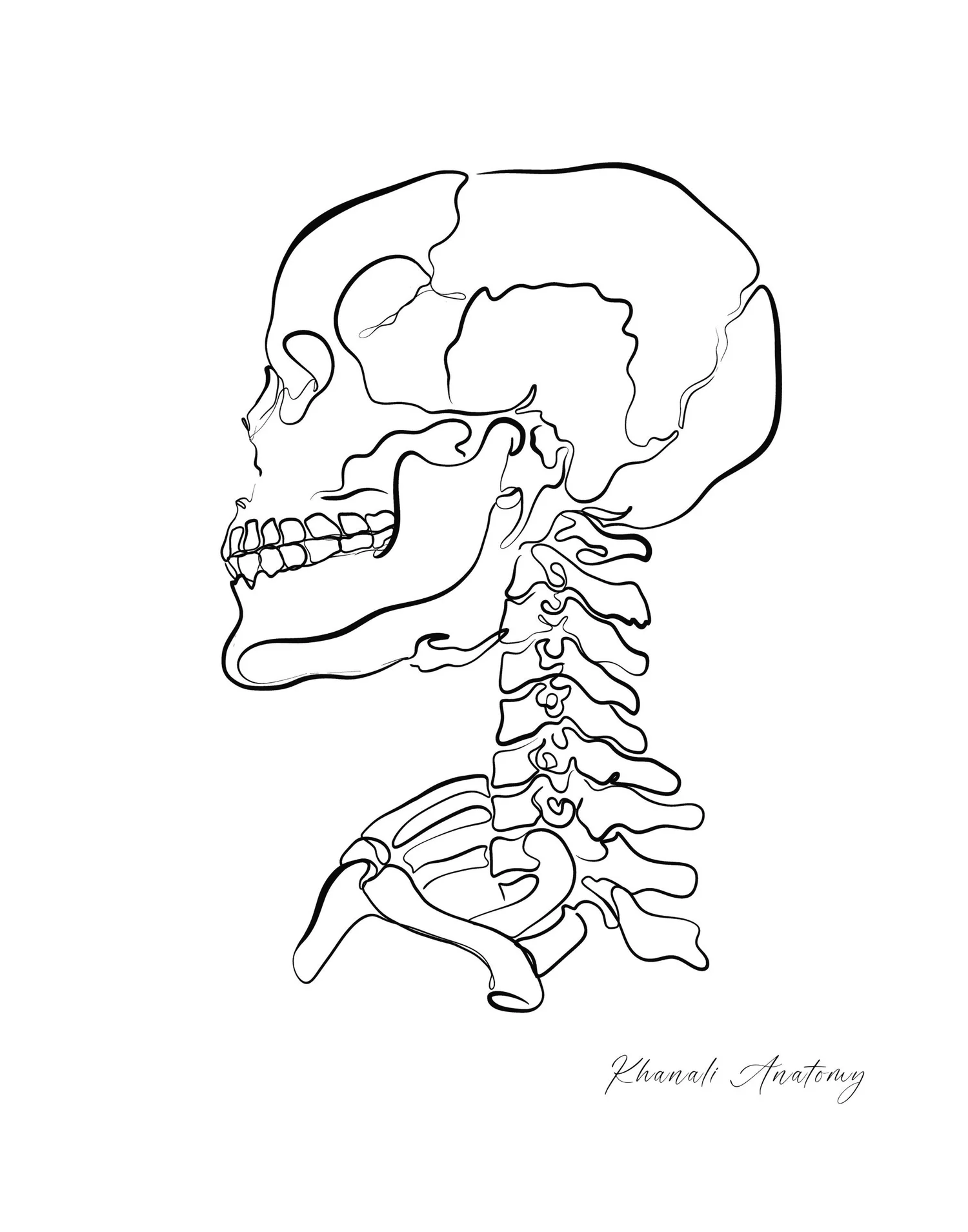
Anatomy line art by Khanali Anatomy, used with permission.